
The History, Philosophy, and Purpose of Geneva Reformed Seminary
For over four decades, the Free Presbyterian Church has established faithful churches in North America, and has trained church planters, pastors, and missionaries to proclaim the gospel with conviction and clarity.
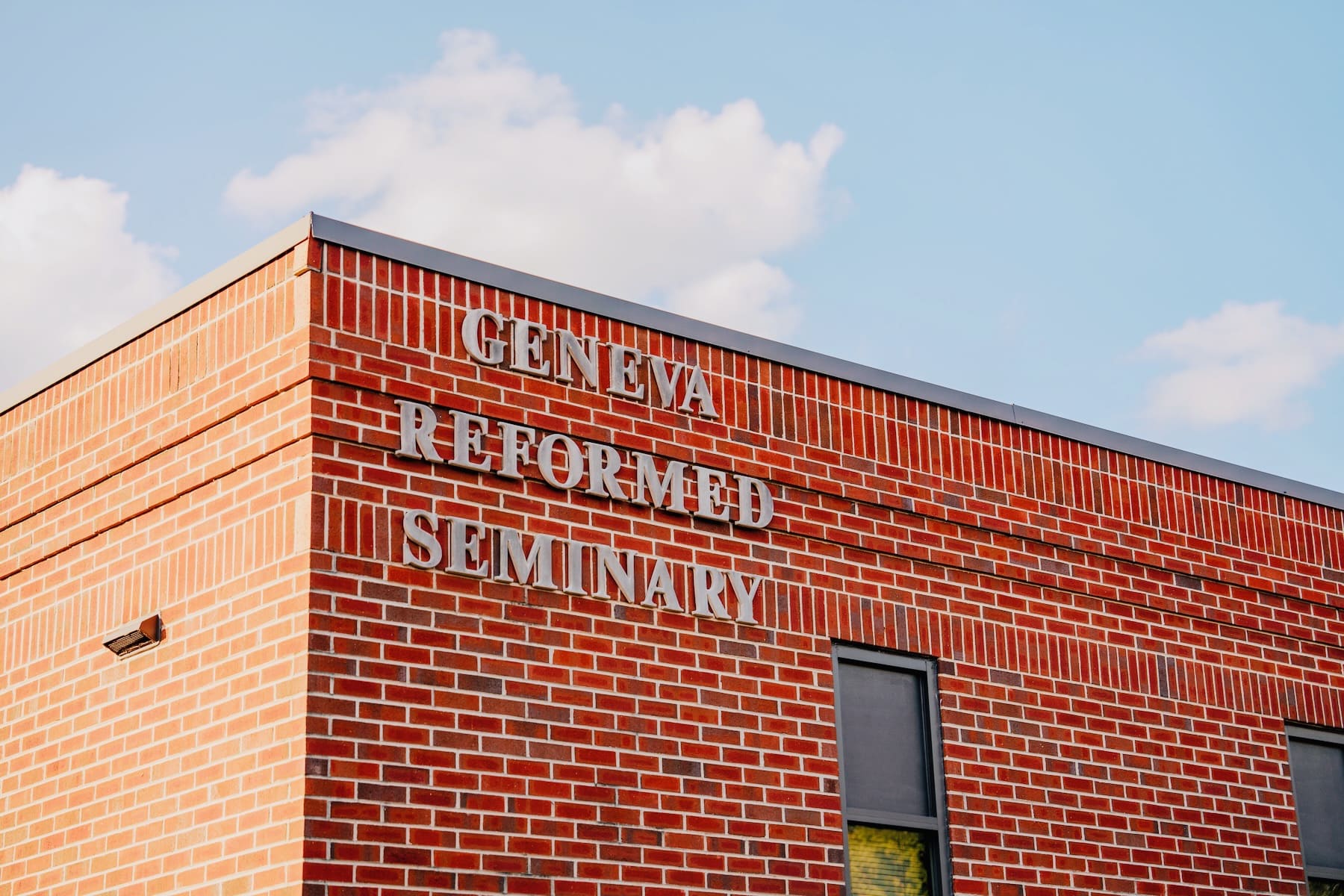
History of GRS
The Presbytery of the Free Presbyterian Church of Ulster operates the Whitefield College of the Bible for the training of missionaries and ministers. Once the Free Presbyterian Church was established in Canada and the United States, it needed to be able to train prospective ministers for the work of pioneering Free Presbyterian congregations in North America. In order to address that need, the presbytery established a branch of its theological seminary in Greenville in 1982 for the training of young men from the United States who felt called to the Free Presbyterian ministry.
Dr. Alan Cairns, the first minister of the Greenville church, who had for years served as the professor of Systematic Theology in Northern Ireland, assumed the lion’s share of the instruction in the North American extension of the Theological Hall. Various professors from Ulster taught on an adjunct basis. After some years, Dr. Mark Allison assumed the position of academic dean and taught various classes along with select and qualified ministers from the North American churches who taught on an adjunct basis. During this entire period, training was limited to men preparing to minister in the Free Presbyterian Church.
In 2000 the Presbytery Commission appointed Dr. Michael Barrett as the vice president for academic affairs and then as president of the institution in 2001. At the same time, the presbytery took the decision to matriculate students from outside the denomination. Once the doors were open to men outside the denomination, it was necessary to eliminate some of the confusion resulting from the name of the institution carried over from Northern Ireland, the Whitefield College of the Bible. In 2002 the presbytery authorized the change of name to Geneva Reformed Seminary (GRS). Dr. Barrett left the seminary in July 2012 to accept a position as Academic Dean of Puritan Reformed Theological Seminary.Two short-term tenures followed before Dr. Mark Allison was appointed president in 2015. He served in that capacity until his death in April 2021. Rev. Reggie Kimbro was appointed president in October 2021.
GRS continues to exist primarily for the training of men called by God to the ministry of the Free Presbyterian Church. Those not called to this specific ministry may be admitted with the understanding that GRS is a denominational institution that will operate without compromise within its denominational distinctives.
Statement of Philosophy
In keeping with the Reformed and Presbyterian tradition of requiring the education of ministers, the primary goal of Geneva Reformed Seminary is to prepare men to be preachers. It is our desire to produce preachers who know God and His word, and who can passionately, effectively, and accurately communicate the word of God to others.
Getting from the text of Scripture to the pulpit is the target of the entire curriculum. Consequently, special weight is given to the mastery of the English Bible. Achieving that mastery includes instruction in necessary ancillary hermeneutic, apologetic, and practical courses.
A thoroughly biblical and historically Reformed systematic theology forms the unifying framework and bedrock for the whole program. The Holy Spirit sovereignly distributes the calling and gifts necessary for the ministry. The function of the seminary is to cultivate those God-given gifts for the glory of God and for the good of the church. If that cultivation is to be successful, the seminary must address the needs of the heart, head, and hands. Devotion to God, academic excellence, and service experience must fuse for effective ministerial training.
To that end, GRS is committed to providing an education that is spiritual, academic, and practical. Recognizing and seeking to avoid the lamentable abuses and unfortunate caricatures of Reformed and covenant theology, the seminary stands without apology for the historic Reformed faith and pursues a strongly fervent evangelistic mission. GRS is pledged to a biblical, fundamental, separatist, evangelistic, and Reformed ministry. We believe that this combination makes Geneva Reformed Seminary unique.
Statement of Purpose
In an address to Princeton Theological Seminary, Benjamin B. Warfield made this statement: “It is customary to say that the theological seminaries are training-schools for the ministry. Properly understood, that is the right thing to say. But it is not very difficult, and it is very common, seriously to exaggerate the function of the seminary under this definition. It is not the function of the seminary to give young men their entire training for the ministry. That is the concern of the presbytery; and no other organization can supersede the presbytery in this business. The seminary is only an instrument which the presbytery uses in training young men for the ministry. An instrument, not the instrument.” (The Presbyterian, November 22, 1917, 8–9).
We concur with Warfield that the purpose of the seminary is to serve the presbytery in fulfilling its responsibility to train those under its care. To that end, the seminary’s purpose equates to that of the presbytery’s and dictates its emphasis. The purpose of the Free Presbyterian Church of North America, and, therefore, the purpose of its educational arm, Geneva Reformed Seminary, is as follows:
- To glorify God in the Trinity of His sacred persons, according to the Scriptures;
- To declare the whole counsel of God and remain faithful to His inspired and infallible Word, the Bible, with particular emphasis on the following truths: the total depravity of man as fallen in Adam; the three-fold function of the law as a mirror to expose and condemn sin, thus shutting men up to Christ as their only hope of gaining acceptance with God, as a curb to deter and restrain the unconverted, and as a rule of life for the regenerate; the limitations of the law, in that it can neither effect justification in an unsaved person nor sanctification in a saved person; the sole mediation and saving merits of the Lord Jesus Christ; and His atoning death, bodily resurrection and ascension into heaven to be the advocate and great high priest of His people;
- To labor for the salvation of the lost by the preaching of the gospel of Christ and calling them to repentance toward God and faith in our Lord Jesus Christ;
- To seek the edification of Christians by teaching them the Scriptures and by pointing them continually to the all-sufficient Christ, the author and finisher of their faith;
- To oppose all expressions of human self-righteousness and to give prominence to the glorious truth of justification by faith in the merits of Christ’s righteousness, which God freely imputes to His people through faith alone;
- To promote and participate in worldwide evangelism through biblically sound and separated mission activity;
- To promote scriptural and godly worship, with special emphasis on prayer, sound biblical preaching, the right administration of the sacraments, and a proper keeping of the Sabbath;
- To contend earnestly for the faith once delivered to the saints (Jude 3), opposing the enemies of the gospel, especially the antichristian system of Roman Catholicism and the unscriptural Ecumenical and Charismatic movements, thus rejecting the compromising policy of neo-evangelicalism in favor of biblical separation;
- To stimulate fellowship with Bible-believing men and churches who are separated unto the gospel of God;
- To surrender the entire work of the ministry to God for the work of the gospel, looking to Him to revive His work in this age of apostasy and to maintain the witness of this church until the glorious personal return of the Redeemer, the Lord Jesus Christ.
Doctrinal Statement
The statement of faith of the Free Presbyterian Church of North America and Geneva Reformed Seminary is contained in the Westminster Confession of Faith, the Larger Catechism, and the Shorter Catechism, along with the Declaratory and Explanatory Statements adopted by the North American Presbytery. The Westminster Standards set forth a detailed statement and exposition of the Reformed theology, which we believe the Bible teaches.
The Declaratory and Explanatory Statements are meant as summary points of particular emphasis. For instance, they modify the Confession in that (1) they make room in the fellowship of the Free Presbyterian Church for those who hold differing interpretations regarding the mode and subjects of baptism, and (2) they allow divergent views of eschatology. Although the FPCNA is tolerant regarding the administration of baptism, it dogmatically repudiates the notion of baptismal regeneration. This openness regarding baptism does not equate to indifference regarding its importance as a Christ-instituted sacrament of the church. The differing views of eschatology are restricted to those historically associated with and compatible with Reformed and covenant theology and presuppositions rather than those associated with dispensational theology and presuppositions.